What's included
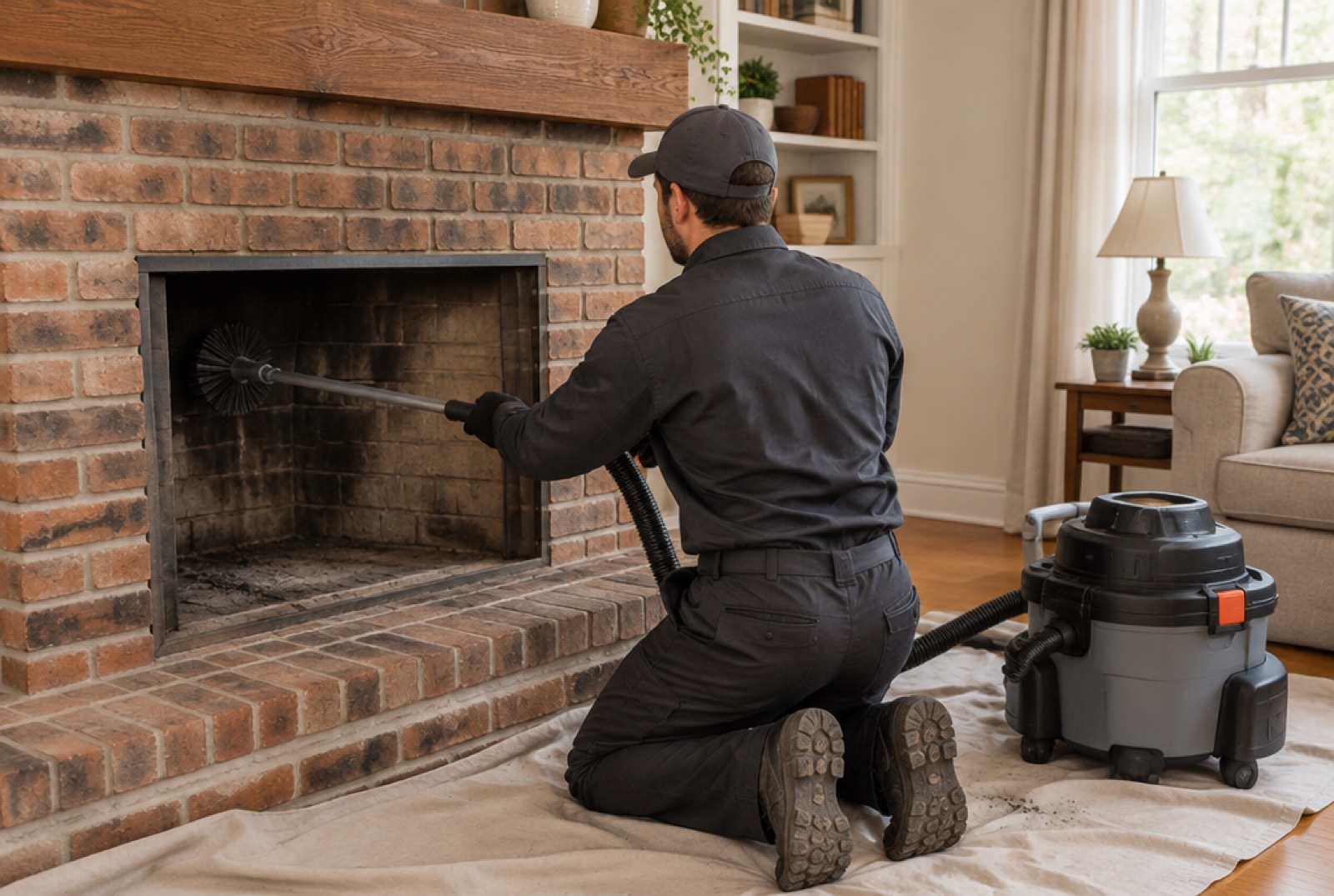
- Home protection first. Drop cloths over the hearth and floor, and a vacuum running while we work to keep soot out of the room.
- Flue sweeping. Brushes sized to your flue, run the full height of the chimney to loosen soot and creosote.
- Smoke chamber and smoke shelf. This area sits just above the damper, catches heavy buildup and is often missed.
- Firebox and damper. Ash and debris removed, and the damper checked to make sure it opens, closes and seals.
- Visual check as we go. If we spot cracked tiles, missing mortar or a damaged cap, we show you. We don't just mention it.
- Written summary. What we cleaned, what we saw, and anything worth watching.
Why it matters: creosote and fire risk
When wood burns, smoke carries unburned particles and vapors up the chimney. As they cool, they condense on the flue walls as creosote. It starts as a flaky, soot-like layer and can harden into a shiny, tar-like glaze. Every form of it is combustible.
If enough builds up and a hot fire reaches it, the creosote can ignite inside the flue. That's a chimney fire. Some are loud and dramatic, but many are slow-burning and go unnoticed, and they can still crack flue liners and damage the masonry. Regular cleaning keeps buildup from reaching that point.
Creosote builds faster when:
- You burn unseasoned or wet wood
- Fires are kept small and smoldering, with restricted air
- The flue is oversized for the appliance or runs cold (common on exterior chimneys)
- Your stove or insert is vented through a flue that wasn't sized for it
How often should a chimney be cleaned?
The fire code standard NFPA 211 calls for an inspection once a year, with cleaning done when it's needed. How often that is depends on how much you burn and what you burn. A household with a fire most winter evenings will need cleaning more often than one that lights a few fires a year. Your annual inspection answers the question for your home.
Our process
- Look first. We check the firebox, damper and flue so we know what we're working with.
- Quote. You get the price before we start.
- Clean. Full sweep with the room protected.
- Report. We walk you through what we found and leave the space as clean as we found it.
Signs it's time to schedule
- It's been more than a year since your last cleaning or inspection
- A strong, smoky or tar-like smell from the fireplace, especially on hot or humid days
- Smoke drifting into the room instead of drawing up the chimney
- Black flakes or debris falling into the firebox
- Fires that are harder to start or keep going
Not sure whether you need a cleaning or an inspection? Read our FAQ or just call. We'll tell you honestly.