Dryer fires by the numbers
Clothes dryer fires are common, and the leading cause is preventable.
2,900
home clothes dryer fires reported each year
34%
of those fires had "failure to clean" as the leading factor
$35M
in estimated property loss each year
Source: U.S. Fire Administration, Clothes Dryer Fires in Residential Buildings (2008–2010). The report estimates these fires also cause 5 deaths and 100 injuries a year. The National Fire Protection Association also identifies failure to clean as the leading factor in home dryer fires.
Why lint builds up in the vent
Lint is made of tiny fibers, and it's highly combustible. Some always gets past the lint screen and settles along the vent line, especially at bends, in long runs and at the exterior hood. As it builds up:
- Airflow drops, so the dryer runs hotter and longer
- Drying times go up, using more energy and wearing out parts
- Fire risk rises, because hot air and flammable lint meet in a restricted space
Signs your dryer vent needs cleaning
- Clothes take more than one cycle to dry
- The dryer or the clothes feel unusually hot
- A burning smell when the dryer is running
- The laundry room feels hot or humid during a load
- Lint collecting around the lint screen opening or the outside vent hood
- The exterior vent flap doesn't open when the dryer runs
- Birds or pests nesting in the outside vent
Our process
- Check the setup. We look at the dryer connection, the transition duct and the full vent route to the outside.
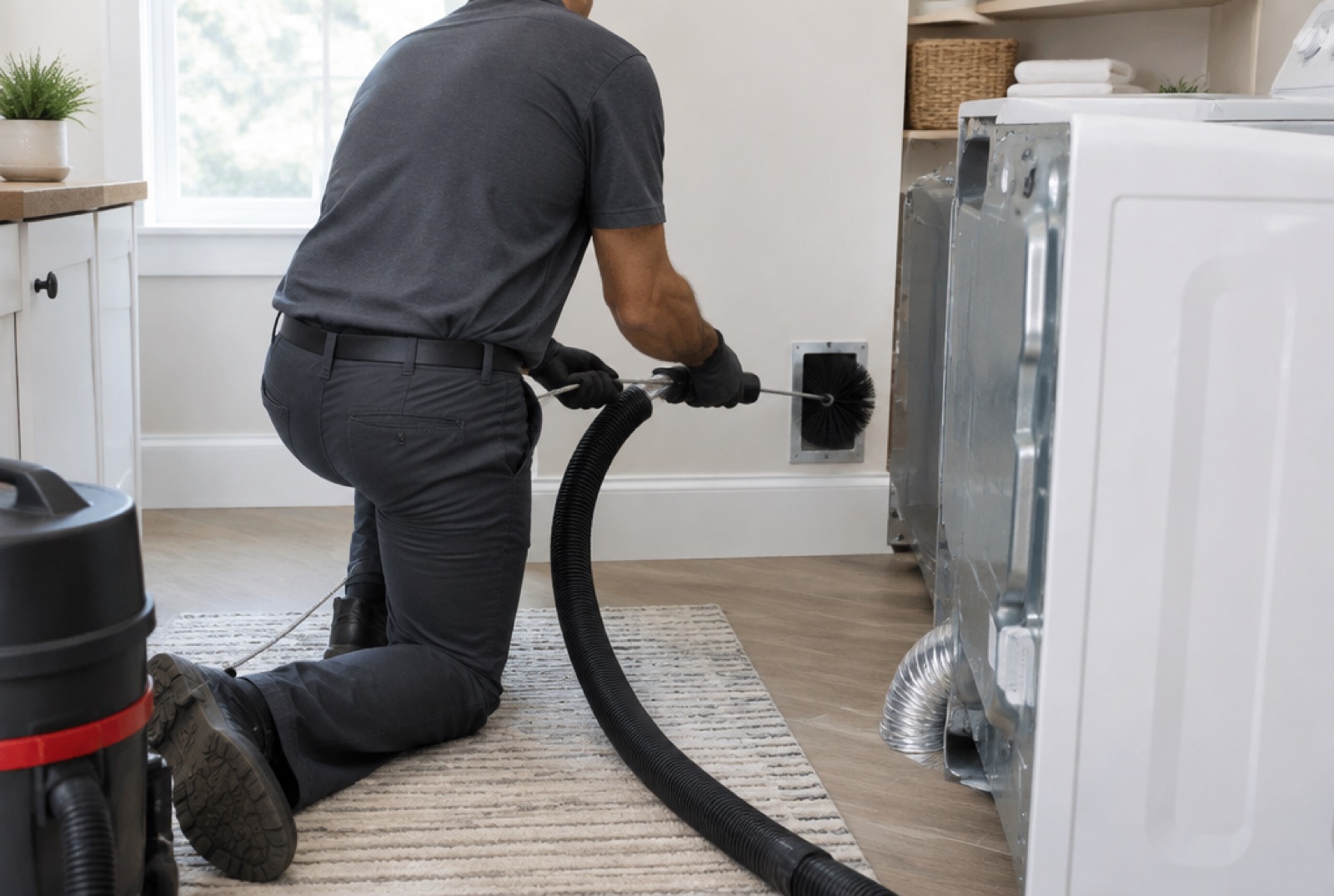
- Disconnect and clean. Using rotary brushes and a vacuum, we clear lint from the entire vent run, working from both ends when access allows.
- Clear the exterior hood. We remove lint and debris and make sure the damper flap opens freely.
- Reconnect and check airflow. We reconnect the dryer and confirm strong airflow at the outside vent.
- Point out issues. For example, a crushed transition hose or a plastic or foil duct that should be replaced with rigid or semi-rigid metal.
Everyday dryer safety tips
These are basic safety tips from the U.S. Fire Administration and NFPA:
- Clean the lint filter before or after every load
- Don't run the dryer when you leave the house or go to bed
- Keep the area around the dryer clear of boxes, clothes and other things that can burn
- Use rigid or flexible metal venting, not plastic or foil
- Have the vent line cleaned periodically, more often for large households or long vent runs