The three levels of inspection
The fire code standard NFPA 211 defines three levels of chimney inspection. The right level depends on your situation, and we'll explain which one you need before we start.
Level 1: routine annual inspection
The standard yearly check for a chimney that's in regular use, when nothing about the system has changed. We examine the readily accessible parts of the chimney exterior, interior, appliance and connection, looking for:
- Basic soundness of the chimney structure and flue
- Obstructions, nests and combustible deposits such as creosote
- Proper clearance from combustibles where it's visible
Level 2: more detailed inspection
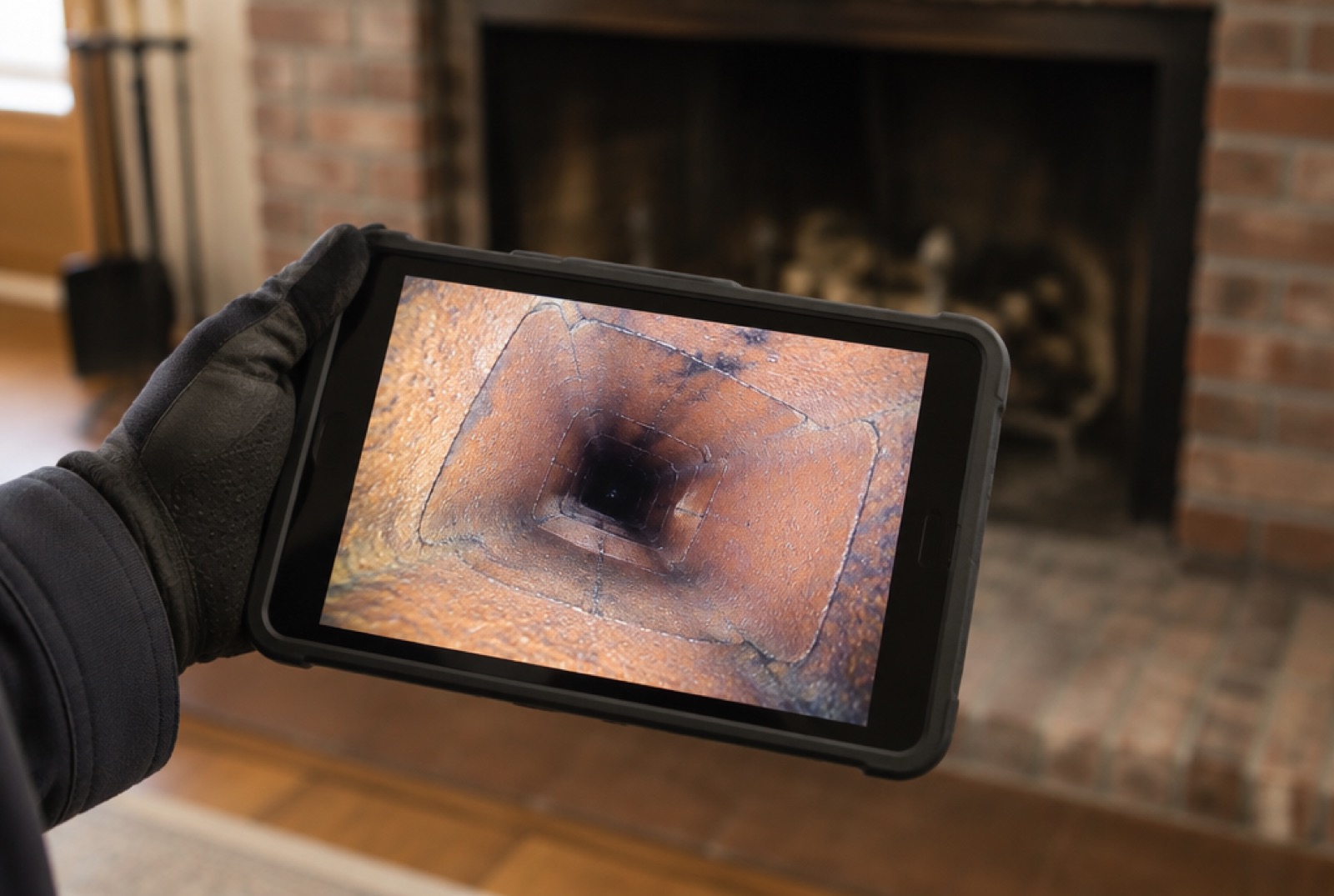
A Level 2 inspection includes everything in Level 1, plus accessible areas such as the attic, crawlspace and roof, and a video scan of the flue interior. NFPA 211 calls for a Level 2 inspection when:
- A home is being sold or transferred
- The system has changed. For example, a new stove or insert, a switch in fuel type, or a relined flue
- There's been an event that may have caused damage, such as a chimney fire, an earthquake, a storm or a malfunction
Level 3: concealed areas
When a Level 1 or 2 inspection points to a hidden hazard that can't be evaluated otherwise, a Level 3 inspection may call for removing parts of the building or chimney (for example, a section of wall or the chimney crown) to reach concealed areas. It's rarely needed, and we'll always explain why before recommending it.
What we check
- Chimney cap and spark arrestor: present, secure, not rusted through or clogged
- Crown: cracks or gaps that let water into the masonry
- Brick and mortar: spalling bricks, missing or crumbling joints, leaning or separation
- Flashing: where the chimney meets the roof, a common source of leaks
- Flue liner: cracked, shifted or missing tiles, and gaps at the joints
- Smoke chamber and damper: buildup, rust, and a proper seal
- Firebox: cracked firebrick or damaged mortar
- Creosote and obstructions: how much buildup there is, and whether cleaning is needed
- Gas and stove venting: connections, pipe condition and clearances
What you get
A plain-language summary of what we found, photos or video where they help, and a clear explanation of which issues need attention now and which can wait. If repairs are needed, you'll get a quote with no pressure to book.
Buying or selling a home?
A Level 2 inspection is the level NFPA 211 calls for when a property changes hands. A standard home inspection usually covers only what's visible and doesn't include a video scan of the flue. Call us to schedule around your escrow timeline.