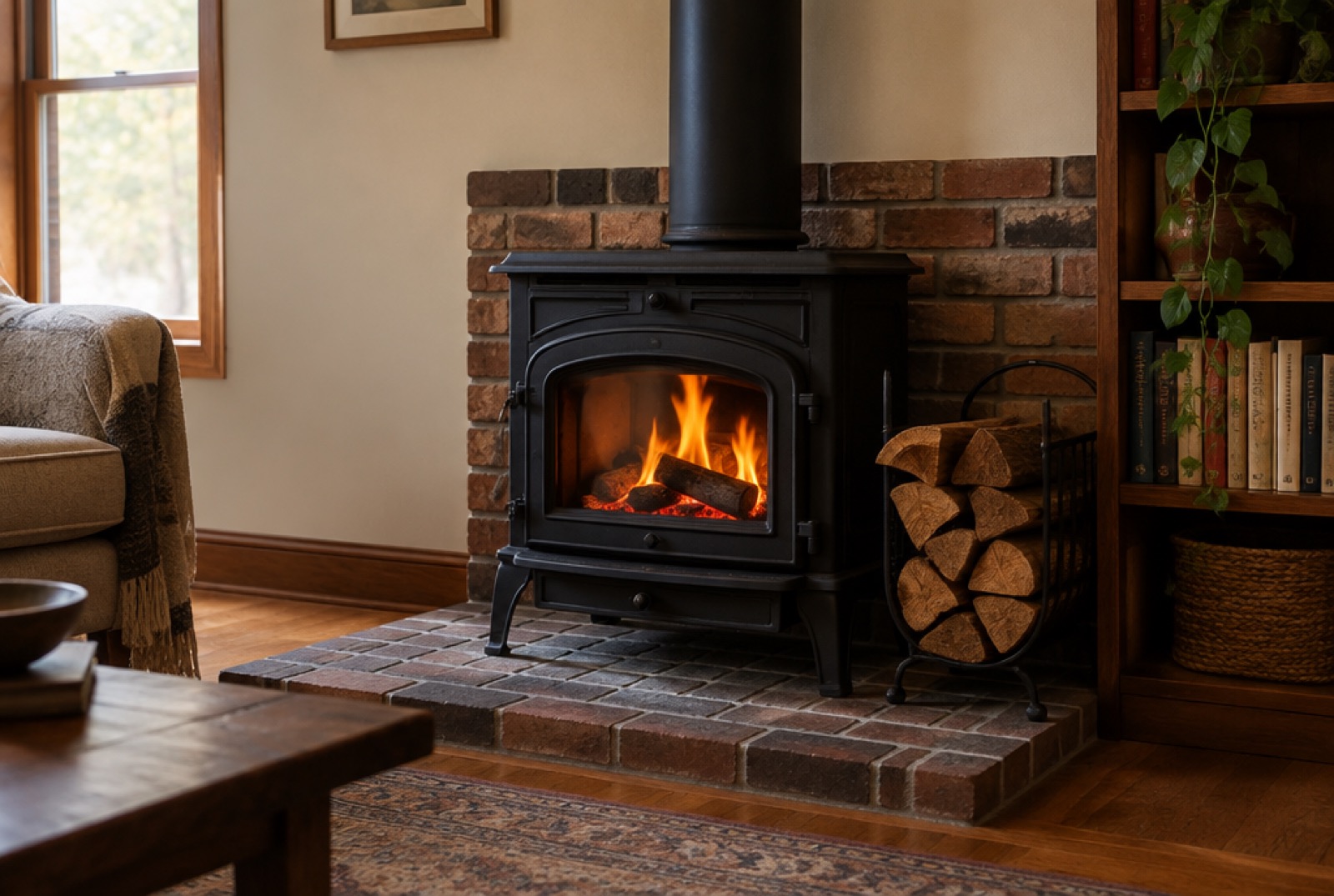
Gas fireplace service
Gas fireplaces don't produce creosote, but they aren't maintenance-free. Vents can be blocked by nests or debris, and burners and pilot assemblies collect dust and lint over time.
A gas fireplace service includes:
- Cleaning the burner, pilot assembly and log set
- Checking and repositioning gas logs so the flame burns as designed
- Cleaning the glass front (on sealed units) and checking the gasket
- Inspecting the vent or chimney for blockages and damage
- Checking that the pilot and ignition work properly
- A reminder to test your carbon monoxide alarms
Smell gas? Leave the house and call your gas utility or 911 from outside first.
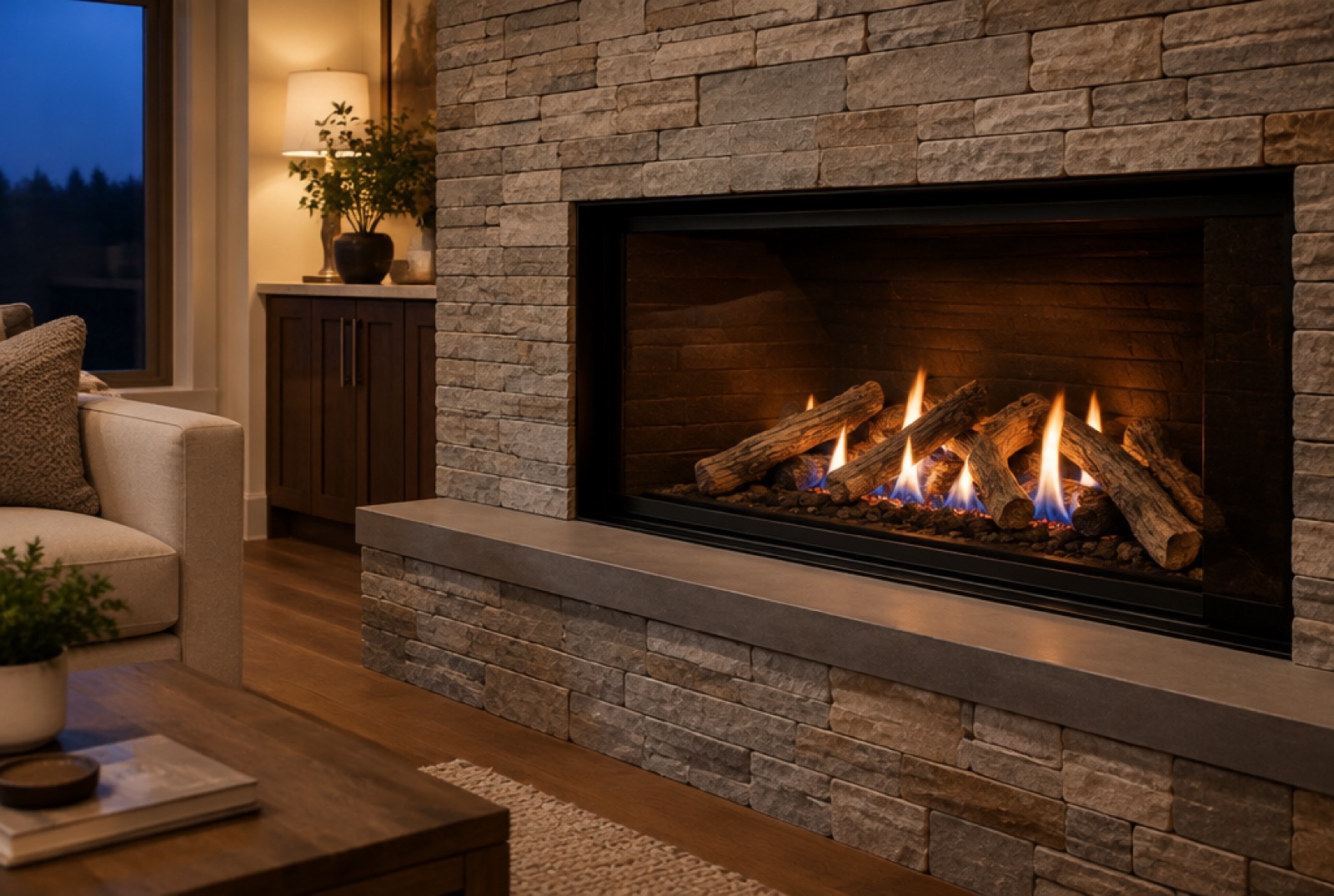
Wood fireplace service
Traditional wood-burning fireplaces need the most regular attention, because every fire leaves creosote behind. Service covers:
- Chimney sweeping and creosote removal
- Firebox inspection, including cracked firebrick and deteriorated mortar joints
- Damper operation and seal
- Smoke chamber condition
- Glass doors and screens checked
Wood burning stove service
Wood stoves and inserts burn hot and efficiently, but their stovepipes and flues still collect creosote, and gaskets wear out. We:
- Clean the stove interior, baffle and flue collar
- Sweep the stovepipe and chimney or liner
- Check door and glass gaskets for a tight seal
- Inspect the stovepipe connections and wall or ceiling clearances
- Check the firebricks and baffle for damage
Pellet stove service
Pellet stoves burn cleanly, but they produce fine ash that builds up quickly in the burn pot, heat exchanger and exhaust path. Neglected ash is a common cause of pellet stoves that won't ignite, burn poorly or shut down. Service includes:
- Clearing ash from the burn pot, firebox and ash traps
- Cleaning the heat exchanger tubes
- Cleaning the exhaust blower and venting
- Checking door gaskets
- Following your stove manufacturer's maintenance guidance
A note on what you burn
For wood fireplaces and stoves, burn only dry, seasoned wood. The EPA's Burn Wise program recommends wood with a moisture content of 20% or less. Wet wood smolders, produces more smoke and leaves more creosote in your chimney.
Also keep in mind the Sacramento Metropolitan Air Quality Management District's "Check Before You Burn" program, which restricts wood burning on certain days during the winter season. Check their website for the day's status.