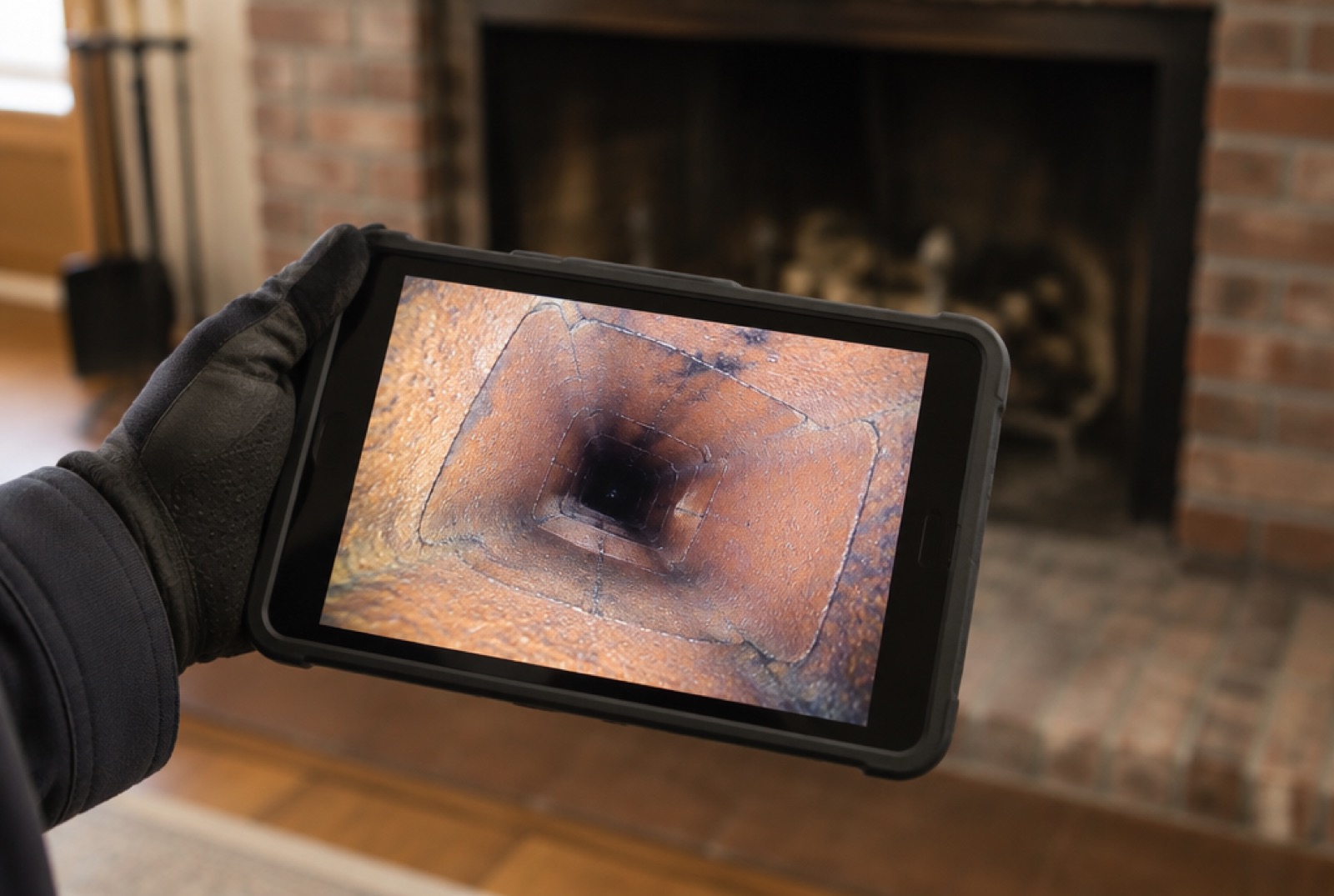
A fireplace or wood stove is one of the best parts of a cold evening. Using one safely isn't complicated, but it helps to understand what's actually going on inside the chimney. Here are the three main hazards, explained plainly, and what you can do about each.
Creosote: the fuel for chimney fires
When wood burns, not everything burns completely. The smoke carries unburned wood particles, gases and moisture up the chimney. As that smoke cools against the flue walls, it condenses into creosote.
Creosote comes in a few forms:
- Flaky soot: a dry, powdery black deposit that brushes off fairly easily
- Crunchy or tar-like: thicker, crusty deposits
- Glazed: a hard, shiny, tar-like coating that's difficult to remove
All of them are combustible. Things that speed up creosote buildup:
- Burning wet or unseasoned wood
- Smoldering fires with restricted air
- Cool flue temperatures, common with exterior chimneys or oversized flues
- Stoves or inserts vented into a flue not sized for them
What to do: Burn dry, seasoned wood (the EPA recommends 20% moisture or less), build hot fires with good airflow, and have your chimney inspected annually and cleaned as needed.
Chimney fires: often quieter than you'd think
A chimney fire happens when creosote inside the flue ignites. Some are dramatic, with loud popping, a roaring sound, dense smoke, and sometimes flames or sparks shooting from the top of the chimney. Many others burn slowly and quietly and are never noticed while they happen.
Either type can reach very high temperatures and:
- Crack or collapse flue tiles
- Damage mortar and masonry
- Let heat reach wood framing next to the chimney
Signs of a past chimney fire include puffy, honeycombed creosote, cracked or missing flue tiles, a warped damper or cap, discolored metal, and roofing damage near the chimney.
What to do: If you think a chimney fire is happening, get everyone out of the house and call 911. If you suspect one happened in the past, don't use the fireplace until it's had a Level 2 inspection, the level NFPA 211 calls for after an event like a chimney fire.
Carbon monoxide: the invisible hazard
Any fuel-burning appliance, whether wood, gas or pellet, produces carbon monoxide (CO). It's colorless and odorless. Normally it goes up and out with the rest of the exhaust. When a chimney or vent is blocked, damaged or undersized, or the house is under strong negative pressure, CO can spill back into the living space.
Early symptoms of CO exposure can feel like the flu: headache, dizziness, nausea, fatigue and confusion. If several people in the house feel sick at once, especially when an appliance is running, treat it as a possible CO problem.
What to do:
- Install carbon monoxide alarms on every level of the home and near sleeping areas. California requires CO devices in homes with a fossil-fuel appliance, fireplace or attached garage.
- Test alarms regularly and replace them on the manufacturer's schedule.
- Keep chimney and vent openings clear. A chimney cap helps keep out nests and debris.
- If a CO alarm sounds, get outside to fresh air and call 911.
Five everyday habits for a safer fireplace
- Inspect every year. Clean when the inspection says it's needed.
- Burn only dry, seasoned wood, never trash, cardboard or treated lumber.
- Use a screen or glass doors to keep sparks in the firebox.
- Keep flammables at least three feet back from the hearth.
- Put ashes in a metal container with a lid, and store it outside away from the house.
The bottom line
Chimney safety comes down to keeping the flue clean, keeping the structure sound and making sure exhaust always has a clear way out. If it's been a while since anyone checked yours, get in touch and we'll take a look.