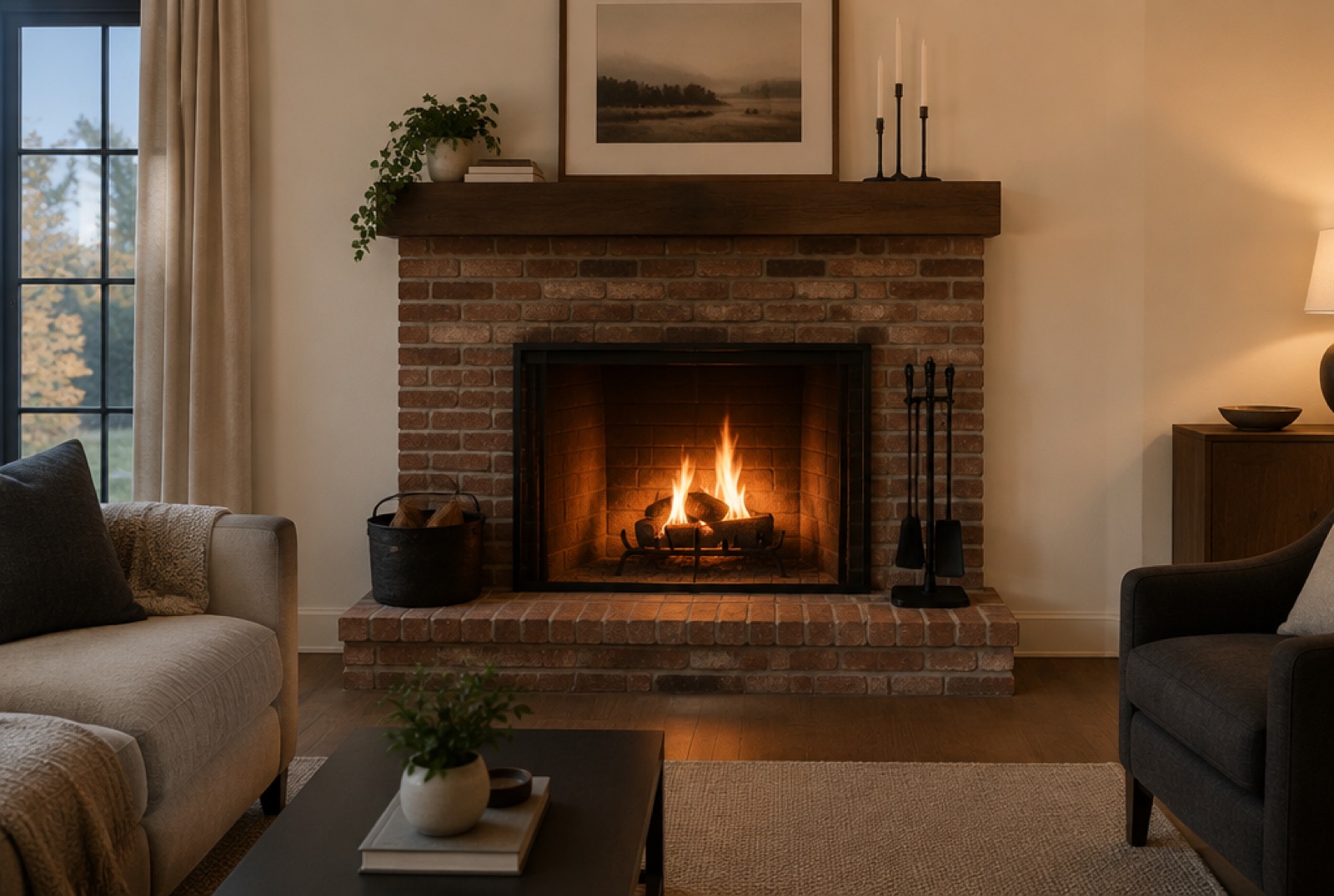
Sacramento doesn't have long, harsh winters, but most homes with fireplaces still use them from late fall through early spring. The valley's climate, with hot dry summers, wet winters and dry fall winds, shapes what your chimney needs through the year. Here's a simple season-by-season plan.
Late summer to early fall: get ready
This is the best time to schedule chimney work, before the first cold night, when everyone else starts calling.
- Schedule your annual inspection. NFPA 211 calls for a yearly inspection, and doing it before burning season means any repairs are done before you need the fireplace.
- Have the chimney swept if needed. Creosote left over from last season is easier to deal with now than mid-winter.
- Check the chimney cap and spark arrestor. Late summer and fall are still dry, windy months. A cap with an intact spark arrestor screen helps keep embers from leaving the chimney.
- Look at the crown and masonry from the ground. Binoculars help. Cracks, missing mortar or loose bricks should be fixed before winter rain.
- Test your smoke and carbon monoxide alarms, and replace batteries as needed.
- Stock up on seasoned firewood. The EPA's Burn Wise program recommends wood with 20% or less moisture content. Store it off the ground and covered, but open on the sides so air can circulate.
Winter: burn smart
- Check before you burn. From November through February, the Sacramento Metropolitan Air Quality Management District runs its Check Before You Burn program, which restricts wood burning on days when air quality is poor. Check the day's status before lighting a wood fire. Rules for your city and appliance type can vary, so check the district's website for details.
- Burn hot, not smoldering. Small, hot fires with good airflow produce less smoke and less creosote than big, damped-down fires.
- Never burn trash, cardboard, wrapping paper, or painted or treated wood.
- Dispose of ashes safely. Let ashes cool, then place them in a metal container with a tight lid, kept outside and away from the house.
- Watch for warning signs, such as smoke entering the room, strong odors or unusual sounds. See our 8 signs your chimney needs cleaning.
Spring: close out the season
- Consider a spring sweep. Cleaning soon after burning season removes creosote before summer heat and humidity make it smell.
- Close the damper once you're done for the season to keep out drafts and critters.
- Check for water intrusion after winter storms. Stains near the fireplace or rust on the damper can mean a crown, cap or flashing problem.
Summer: the off-season
- Deal with odors. If your fireplace smells in the heat, creosote is the usual culprit. A cleaning, plus a well-sealed damper, typically solves it.
- Keep an eye on animals. Birds and other animals look for sheltered spots in spring and summer, and an uncapped chimney is an easy target.
- Clean your dryer vent. Not a chimney task, but summer is a good time for it, and failure to clean is the leading factor in home dryer fires, according to the U.S. Fire Administration.
- Book repairs. Masonry work like tuck pointing and crown repair is best done in dry weather.
Don't forget gas fireplaces and stoves
- Gas fireplaces: Have them serviced before the season. Clean the burner and logs, and check the vent for blockages.
- Wood stoves and inserts: Sweep the stovepipe and flue, and check door gaskets.
- Pellet stoves: Do a thorough cleaning of the heat exchanger and exhaust path, following the manufacturer's schedule.
A simple rule of thumb
Inspect every year, clean when needed, and fix small problems in dry weather. If you'd like help with any part of this list, contact us for a free quote.